Which WC cabins are suitable for schools, offices, and swimming pools?
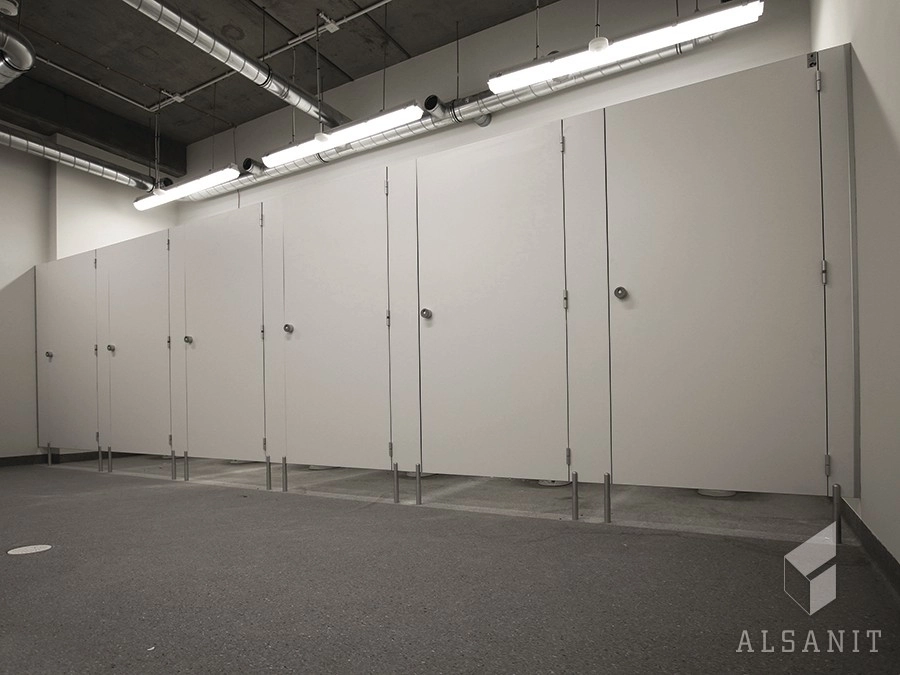
Choosing the right WC cubicles for public buildings affects not only the appearance of the washroom but also its durability, user safety, and long-term operating costs. Schools, offices, and swimming pools place very different demands on equipment — from resistance to moisture and heavy use, to easy cleaning and a high level of privacy and comfort. Instead of selecting a universal solution, it is better to match materials, dimensions, and hardware to the real working conditions of each facility. In this article, you will find practical guidance to help you choose WC cubicles that are functional, durable, and cost-effective to maintain.
How do you match cubicle materials to each setting?
Every building puts different stress on washrooms. A leisure centre adds steam, splashes, and chemicals. A school adds impacts, graffiti risk, and constant traffic. An office adds design, comfort, and a quieter vibe.
Start by looking at moisture and wear, then pick the panel core and surface. For public and commercial washrooms, durable laminates are proven choices:
- compact laminate (also called compact HPL) is waterproof and ideal for showers, pools, and hose-down cleaning;
- high-pressure laminate (HPL) suits busy, dry or mildly damp rooms such as offices and most school areas outside direct wet zones;
- scratch-resistant, easy-clean decorative laminates reduce cleaning time and keep a smart look.
Edges and frames also matter. Use fully sealed edges and moisture‑resistant adhesives. In pools and shower blocks, choose 316 stainless steel hardware and non‑rusting fixings; in dry zones, anodised aluminium and stainless steel components provide long service and a clean aesthetic. Avoid over‑specifying pool‑grade hardware where it is not needed, but never under‑specify for wet or high‑abuse areas.
What privacy and safety standards should you aim for?
Aim for doors and pilasters that feel solid, with smooth closing and clear occupancy indicators. Use anti-finger-trap detailing and emergency-release locks, especially in schools. Rounded corners, shatter‑resistant components, and robust coat hooks reduce injuries. For accessible and ambulant use, include grab rails, outward‑opening doors, and easy‑reach hardware.
How should dimensions and clearances differ by building type?
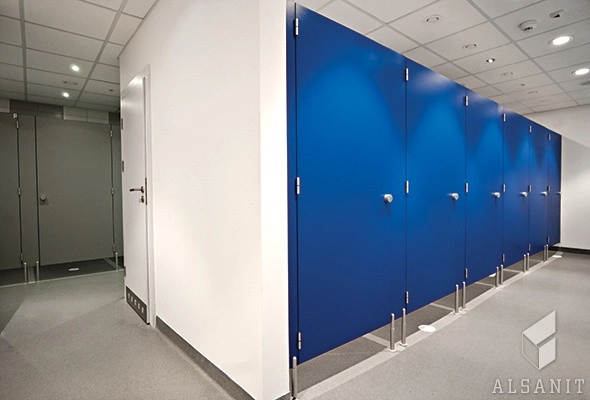
Standard‑height cubicles support airflow and easy cleaning; full‑height cubicles increase privacy and a premium feel. Keep a consistent floor clearance for mopping and emergency access. In higher‑privacy zones, extend headrails and door height while maintaining planned airflow.
- Primary schools: use lower doors and partitions for safe supervision.
- Secondary schools: standard or mid‑height systems balance privacy and durability. Strong pilasters, thicker cores, and reinforced hinges help resist rough use.
- Pools: provide door undercuts and top gaps for airflow, plus corrosion‑proof feet and fixings.
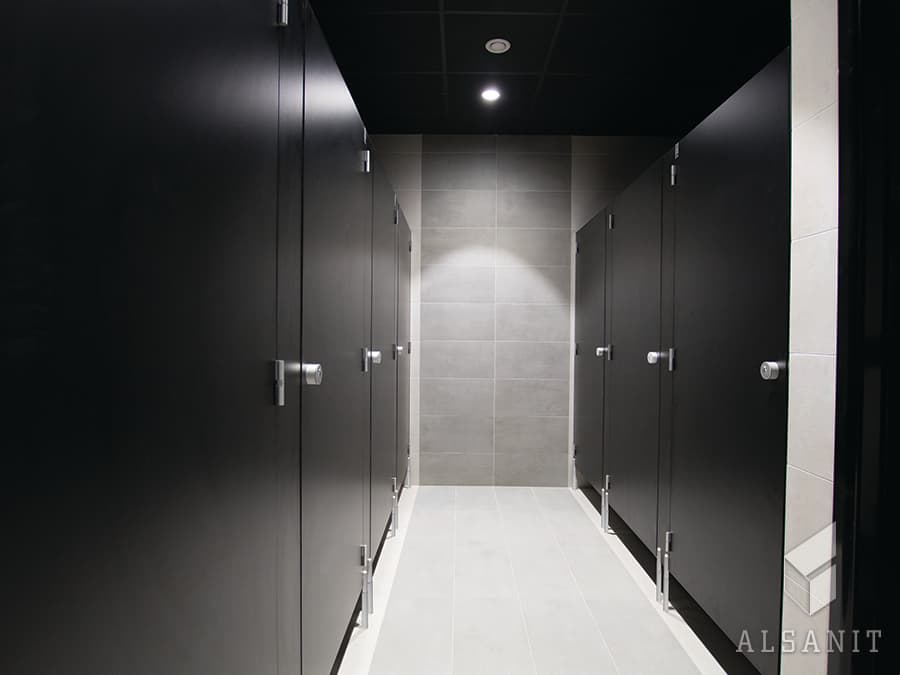
- Offices: full‑height options with minimal sightlines and privacy profiles deliver a quiet, refined feel.
- Accessible rooms: allow generous turning space and a clear transfer zone. Place coat hooks and shelves within seated reach. Keep thresholds flat for wheelchairs and prams.
Which hardware works in wet, busy, or premium spaces?
- Wet areas: 316 stainless steel hinges, indicator bolts, brackets, and feet.
- Busy school areas: heavy‑duty hinges with through‑bolts and concealed fixings to deter tampering.
- Premium offices: slim, refined hardware with positive, quiet action. Always include external emergency release and tamper‑resistant screws.
How do you plan ventilation, durability, and hygiene?
Good airflow controls odours and dries surfaces. Door undercuts and small top gaps help air move. Add extract ventilation above the washroom line for steady circulation.
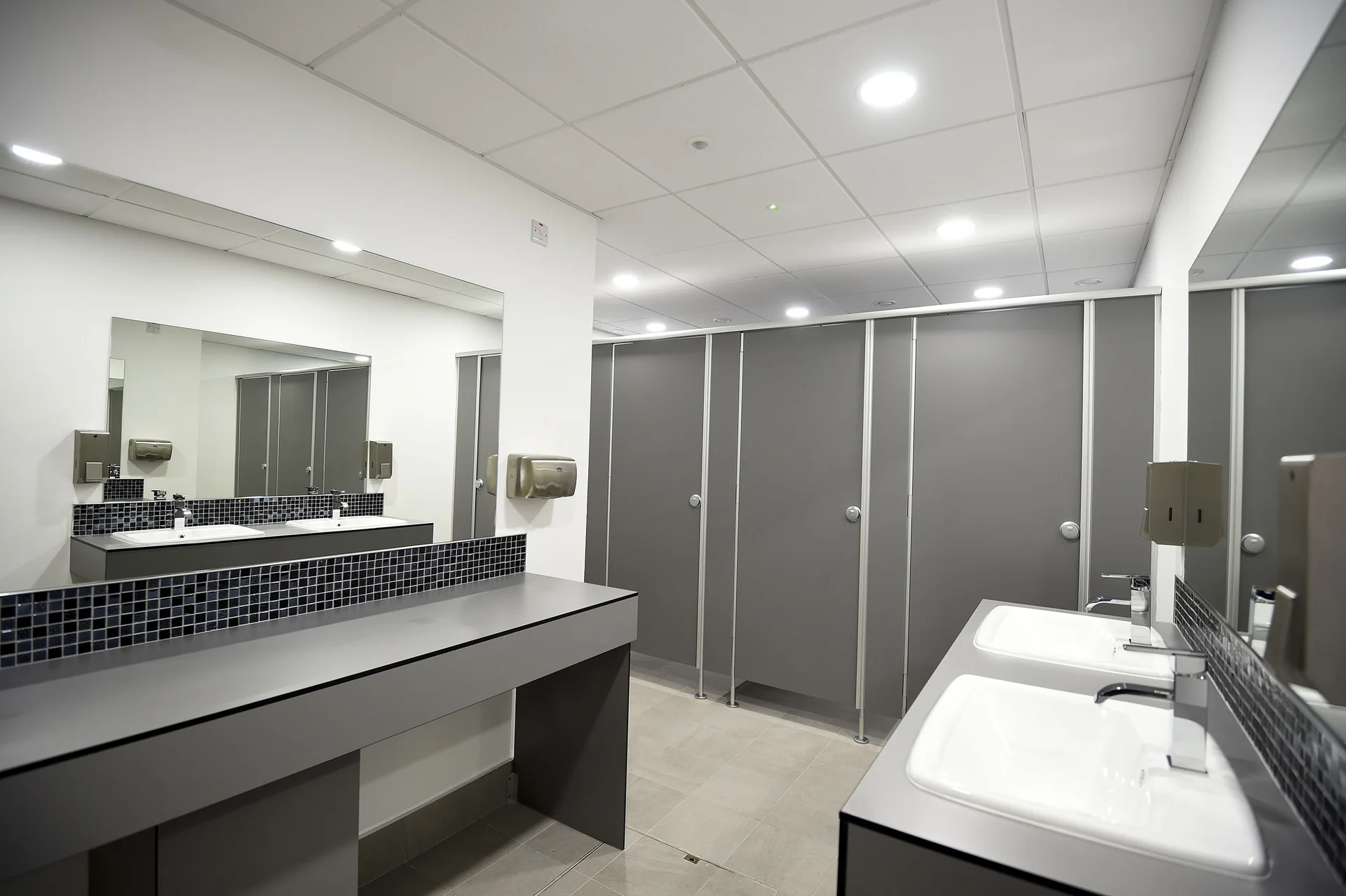
Hygiene improves when surfaces are flush and easy to wipe. Pedestal feet lifting partitions off the floor speed up mopping. Minimise dirt traps with capped profiles and sealed edges. In showers and pool decks, choose components that tolerate routine hosing and neutral‑pH cleaners.
Can full-height cubicles still provide airflow?
Yes. Options include a slim shadow gap at the door top and a discrete undercut at the bottom. Use transfer grilles above the corridor line if the room relies on mechanical extract. Keep a consistent gap strategy across the run so privacy and performance stay balanced.
What makes installation faster and snag-free?
A smooth fit‑out starts with a clear survey and plumb walls. Agree datum lines, finished floor levels, and door swings early. Factory‑drilled panels and pre‑assembled hardware sets reduce site time. Label every set so installers can progress in sequence.
Before work begins, align drawings with site conditions and set a single point of truth for dimensions:
- carry out a measured survey after first fix but before final finishes;
- confirm floor flatness and mark a continuous datum line;
- set stainless or aluminium wall channels with high‑grab adhesive and fixings;
- level pedestals and pack gently to avoid panel stress;
- use door templates for hinge and lock alignment;
- pre‑label boxes per cubicle bay and floor.
Clear RAMS and a phased programme help keep other trades moving. Short manufacturing slots are achievable when specs are final and repeatable. Protect finished panels until handover to avoid chips and scratches. Deliver O&M guidance and a small spares kit with each project.
How can you control lifetime costs and maintenance?
Total cost of ownership beats headline price. Durable cores, sealed edges, and quality hinges cut call‑outs. Standardise finishes and hardware across sites to simplify spares. Keep a log of panel codes so you can order exact replacements.
Look for warranties that cover both panels and hardware. Choose easy‑clean surfaces that resist staining. Make sure parts like indicator bolts and hinges can be swapped with basic tools. Train cleaning teams on safe products for each surface.
What cleaning routine keeps cubicles looking new?
Set a daily routine with neutral‑pH cleaners and soft cloths. Rinse and dry edges, lock keeps, and hinge areas to stop residue build‑up. Avoid abrasives and scouring pads. Use pool‑safe methods on compact laminate in wet zones and rinse after disinfecting. Wipe graffiti promptly with compatible removers to prevent shadowing. Check fixings weekly and tighten any that loosen.
What design ideas lift the user experience?
- Colour‑code areas by floor or function for quick wayfinding.
- Use full‑height or minimal‑gap privacy detailing in quiet office zones for a calmer feel.
- Add bold, wipe‑clean signage with high contrast.
- Provide practical touches like shelves, bag hooks, and device rests where space allows.
Frequently Asked Questions About WC Cubicles for Public Buildings
You ask similar questions during early planning and tender stages. Here are clear, practical answers you can act on right away.